
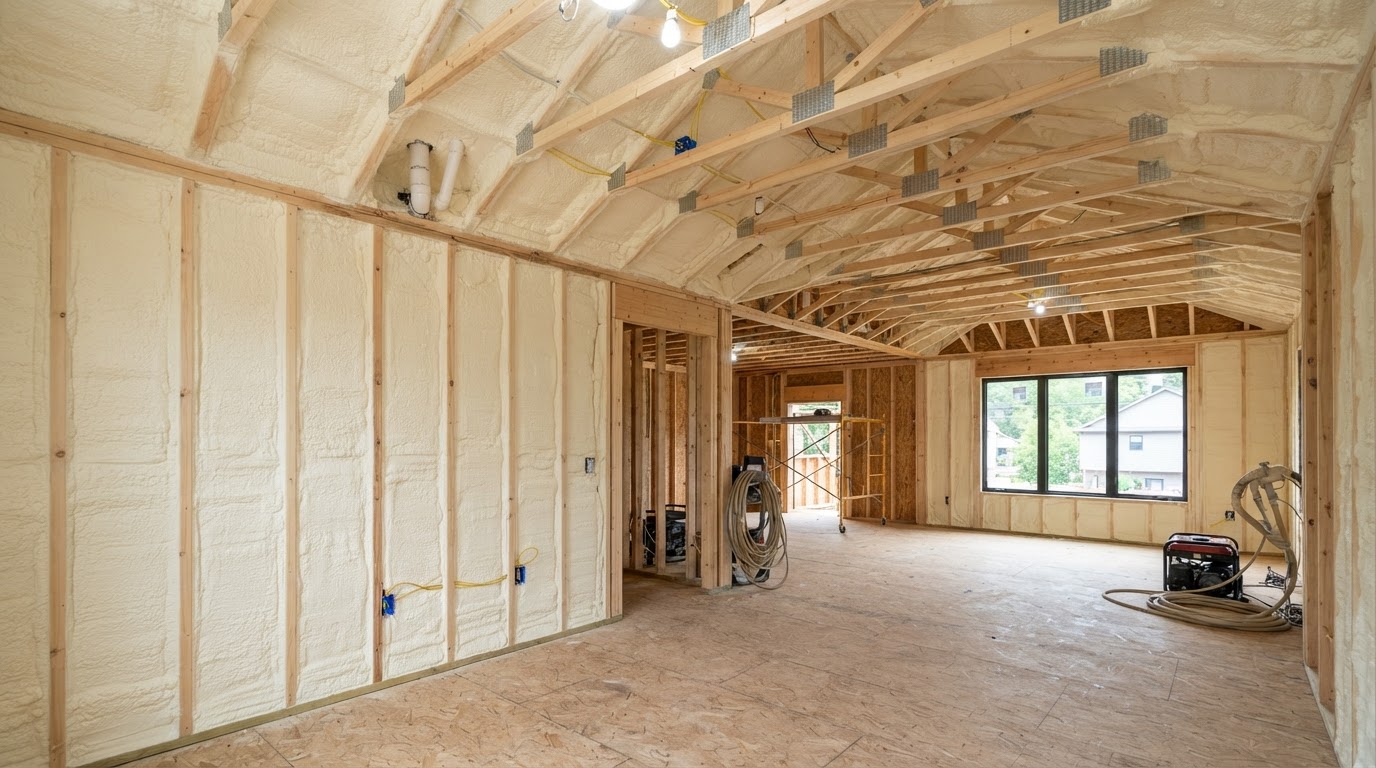
Do You Need to Remove Old Insulation Before Installing Spray Foam?
Last reviewed: November 5, 2026
Old insulation does not always have to be removed before spray foam installation. Removal depends on where the new thermal boundary will sit, the condition of the existing material, moisture, contamination, access, assembly design, and whether old insulation interferes with preparation or inspection. Wet, contaminated or severely deteriorated insulation should not simply be concealed behind a new insulation system.
When Old Insulation May Need to Be Removed
Removal is commonly considered when existing material is damaged, contaminated, or blocks access to the substrate that will receive new foam.
- Water-damaged insulation that has absorbed moisture or lost its structure
- Mold-contaminated material where contamination has been confirmed
- Pest-contaminated insulation with nesting, droppings or debris
- Heavily soiled or deteriorated material no longer performing as intended
- Collapsed or compressed insulation that no longer fills the cavity
- Insulation blocking substrate access needed for new foam application
- Material hiding roof-deck, framing or foundation conditions that must be inspected
- Fiberglass hanging or falling away from crawl-space floor framing
- Damaged metal-building liner systems where relevant to the planned assembly
Note: Contamination or hazardous-material concerns may require the appropriate specialist. We do not perform mold remediation, pest remediation or hazardous-material abatement unless independently verified.
When Existing Insulation May Be Able to Remain
In some assemblies, existing material may remain after project-specific evaluation rather than be removed.
- Clean attic-floor insulation when roofline foam is being considered and the floor insulation still serves a purpose
- Insulation in portions of the building outside the current project scope
- Existing material that does not interfere with substrate preparation or inspection
- Assemblies intentionally retaining multiple insulation layers where appropriate to the design
Existing insulation should be evaluated as part of the complete assembly — it should not simply be assumed that it must always remain or always be removed.
Moving the Thermal Boundary Changes the Decision
In a typical vented attic, insulation sits at the attic floor. If the project moves the thermal boundary to the roofline (an unvented attic approach), the role of the existing attic-floor insulation changes — and that may change whether it should remain.
Factors include airflow, attic conditions, HVAC location, moisture, and access. The decision should follow the assembly design, not a blanket rule. See our vented vs unvented attic guide and roof deck spray foam guide for more detail.
Fiberglass, Cellulose & Existing Spray Foam
Fiberglass
Batts, blown fiberglass, compressed material, dirty or damaged batts, gaps, and crawl-space floor insulation should all be evaluated. Properly installed fiberglass may remain useful where it still serves the intended purpose.
Cellulose
Loose-fill attic cellulose and dense-pack wall cellulose may involve dust, access considerations and thermal-boundary changes. Standard spray foam cannot simply be sprayed through existing cellulose into a finished cavity.
Old Spray Foam
Existing foam should be evaluated for adhesion, thickness, physical condition, substrate condition, moisture, off-ratio or defective material, and compatibility with additional foam. Questionable or defective existing foam may need further evaluation before more material is applied.
Attic & Crawl Space Insulation Removal
Attic Insulation Removal
Removal may be considered for access to the ceiling plane, inspection, contamination, changing the thermal boundary, air-sealing work, or damaged material. See our attic air sealing service.
Crawl Space Insulation Removal
Falling fiberglass, damp batts, floor-vs-wall strategy, pest contamination, plumbing access, rim areas, and encapsulation plans all factor in. See the crawl space strategy guide.
Metal Building Insulation Upgrades
Vinyl-faced fiberglass, compressed blankets, tears, gaps, moisture, and corrosion behind existing systems all affect a metal-building upgrade. Direct-to-metal foam considerations depend on substrate condition and condensation strategy. Existing fiberglass should not automatically be removed without evaluation. See our metal building service and metal building condensation guide.
Removal Adds Cost and Labor
Removal may affect labor, disposal, access, project schedule, preparation time, and cleanup. It is a separate scope from the foam installation itself. See the spray foam cost guide for the variables that affect pricing.
Questions to Answer Before Removing Existing Insulation
- What insulation is currently present (fiberglass, cellulose, foam, other)?
- Where is it installed (attic floor, walls, crawl space, roofline)?
- Is the material dry and free of moisture staining?
- Is the material clean and free of pest or biological contamination?
- Is the thermal boundary changing as part of the project?
- Does existing insulation block access to the substrate that will receive foam?
- Does it conceal damage, leaks or framing conditions that need evaluation?
- Will new foam directly contact the underlying surface?
- Is there suspected contamination or hazardous material?
- Does removal require specialist handling (asbestos, mold, pest debris)?
What About Asbestos or Other Hazardous Materials?
Older buildings may contain materials that should not be disturbed without appropriate evaluation. Do not identify a material as asbestos based on appearance. If suspect hazardous materials are present, testing and removal should be handled by appropriately qualified professionals before insulation work proceeds.
Frequently Asked Questions
Do I need to remove fiberglass before spray foam?
Not always. Removal depends on where the new thermal boundary will sit and whether the fiberglass interferes with the planned assembly.
If spray foam will be applied to a different surface than the fiberglass occupies, and the fiberglass is clean and dry, it may remain. If it blocks substrate access, hides damage, or the thermal boundary is moving, removal may be appropriate.
Can spray foam be installed over old insulation?
In some assemblies, yes — but only after the existing material and substrate are evaluated.
Spray foam must contact a suitable, dry, clean substrate to perform as intended. Installing over wet, contaminated or deteriorated material can trap problems behind a new insulation system. Existing insulation should be evaluated as part of the complete assembly.
Should attic-floor insulation be removed when spraying the roofline?
It depends on the assembly design, HVAC location and ventilation strategy.
Moving the thermal boundary from the attic floor to the roofline changes how the attic behaves. Existing attic-floor insulation may remain, be reduced, or be removed based on airflow, moisture, HVAC location and project goals. This should be evaluated, not assumed.
Can wet insulation stay in place?
No. Wet insulation should not be concealed behind new foam.
Wet, damp or water-damaged insulation should be removed and the moisture source corrected before any new insulation is installed. Concealing wet material can trap moisture against structural framing.
What happens to old crawl-space fiberglass?
Falling, damp or pest-contaminated crawl-space fiberglass is commonly removed when the insulation strategy changes.
If the project moves insulation to the perimeter walls or encapsulates the crawl space, old floor fiberglass may no longer serve the intended purpose. Its condition, moisture history and contamination should be evaluated before a decision is made.
Can spray foam go over existing spray foam?
Potentially, but existing foam must be evaluated for adhesion, thickness, moisture and compatibility first.
Questionable, off-ratio or visibly defective existing foam may need further evaluation before additional material is applied. Adhesion, substrate condition and signs of moisture all affect whether layering is appropriate.
Does insulation removal increase project cost?
Removal can add labor, disposal, access, preparation and scheduling time to a project.
The extent depends on material type, location, access and contamination. Removal is a separate scope from the foam installation itself and should be discussed during project planning.
What if I suspect asbestos or contaminated insulation?
Suspect hazardous materials should be tested and handled by appropriately qualified professionals before insulation work proceeds.
Do not identify a material as asbestos based on appearance. Vermiculite and certain older building materials may require professional testing and abatement. Contamination or hazardous-material concerns may require the appropriate specialist.
Technical References
- U.S. Department of Energy — Insulation and Air Sealing guidance
- Building America Solution Center / PNNL — Existing Home Retrofit guidance
- Spray Polyurethane Foam Alliance (SPFA) — Retrofit and renovation guidance
- Manufacturer technical data and installation instructions for the specific foam product
Related Resources & Services
Reviewed for project-planning accuracy by Madison Spray Foam Installation · Last reviewed: November 5, 2026
Planning a Spray Foam Upgrade?
Share your property location, existing insulation type, application area, photos, moisture history and project goals so we can evaluate whether removal is needed.