
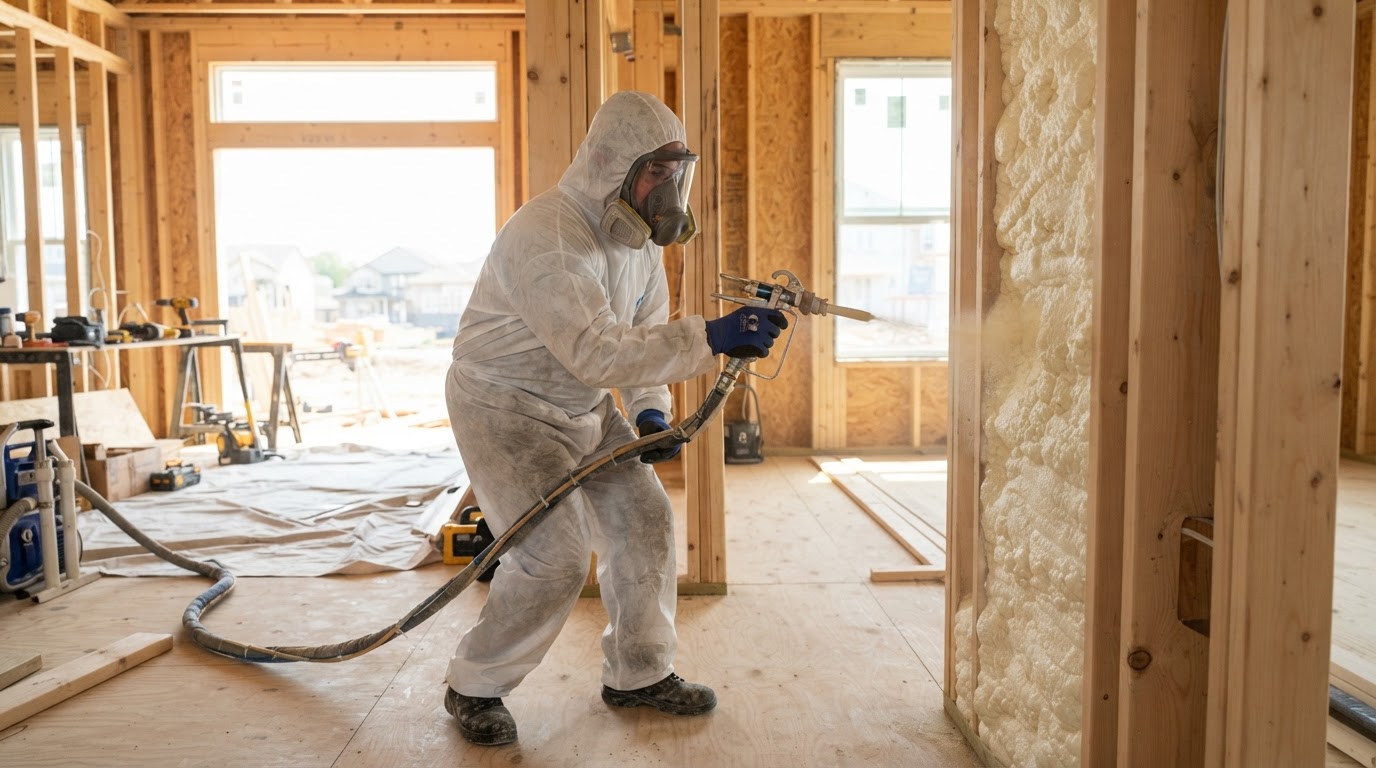
Spray Foam Insulation in Madison, AL
Spray foam insulation in Madison, AL is a high-performance method of sealing and insulating the building envelope using spray polyurethane foam (SPF) that expands on application to fill gaps, joints, and irregular cavities. Madison Spray Foam Installation provides both open-cell and closed-cell SPF for residential attics, crawl spaces, exterior walls, metal buildings, pole barns, workshops, garages, and new construction framing throughout Madison, Alabama and surrounding North Alabama communities.
This page is the main service hub for our spray foam insulation work. It introduces the full range of applications we handle and links to dedicated specialty pages where you can explore each service in depth. Whether you are planning a custom home, retrofitting an older house, insulating a steel workshop, or conditioning a commercial facility, the right foam system and assembly strategy depend on your specific structure and goals.
To get a recommendation tailored to your property, request an estimate or call (256) 387-9068. We evaluate the building assembly, accessibility, and project objectives before recommending a foam type and application approach.
What Spray Foam Insulation Does for Madison AL Properties
Spray polyurethane foam is a two-component material mixed and sprayed under pressure. As it is applied, the liquid expands and adheres directly to framing, sheathing, concrete, and metal, forming a continuous insulating layer that also functions as an air barrier when properly installed. Unlike pre-cut batts or loose-fill materials, SPF conforms to the surface it contacts, filling the cracks, corners, and penetrations that allow uncontrolled air movement through a building envelope.
For properties in Madison and across North Alabama, that air-sealing characteristic is often the main reason owners choose spray foam. Hot, humid summers drive moist outdoor air into attics and wall cavities, while winter cold snaps expose gaps around rim joists, top plates, and mechanical penetrations. By reducing uncontrolled air leakage, properly specified SPF can help stabilize interior conditions and support the performance of the overall building envelope.
Because spray foam is applied as a liquid that expands in place, it is well suited to irregular spaces that are difficult to seal with rigid or fibrous materials. It can be used in new construction framing and in many retrofit scenarios where access allows.
Benefits & Application Considerations for Spray Foam
Spray foam is commonly chosen because it combines insulation and air sealing in a single application. The benefits below describe what is generally achievable when the foam is properly specified and installed for the correct assembly; results vary by property and application.
Air Sealing
Expanding foam fills gaps, cracks, and penetrations that allow uncontrolled air movement through the envelope.
Thermal Performance
Provides continuous thermal resistance across framing members, reducing thermal bridging compared to cavity-only insulation.
Fills Irregular Cavities
Conforms around pipes, wiring, junction boxes, and curved geometry that batts cannot seal effectively.
Metal Building Condensation Control
Direct-to-metal adhesion can help reduce condensation on the underside of roof and wall panels.
Spray foam is a material and application system, not a guarantee of specific energy savings or moisture outcomes. Building performance depends on the assembly design, foam type, thickness, substrate condition, and other building-science factors. Where moisture, drainage, or ventilation problems exist, those may need to be addressed separately from insulation.
How Spray Foam Insulation Is Installed
A typical spray foam project follows a logical sequence from first discussion through final inspection. The exact steps adjust to the structure and service, but the framework below reflects how we approach a Madison-area project.
Project Discussion
We review the structure, intended use, performance goals, and any concerns about existing insulation or moisture.
Application Evaluation
We assess framing depth, accessibility, substrate condition, and the target assembly to determine feasibility.
Foam & Approach Selection
We recommend open-cell or closed-cell foam, target thickness, and the areas to be insulated based on the assembly.
Work Area Preparation
Surfaces are cleaned and verified dry; adjacent finished areas, mechanicals, and openings are masked and protected.
Spray Foam Application
Foam is sprayed in controlled passes to achieve consistent coverage and the specified thickness.
Inspection & Finishing
We verify coverage and depth, trim where required for drywall, and review project-specific finishing considerations.
Open-cell and closed-cell foam each suit different assemblies. See our Open Cell Spray Foam Insulation and Closed Cell Spray Foam Insulation pages for how that choice applies to your project.
Spray Foam Insulation Contractor Serving Madison, AL
Madison Spray Foam Installation is based in Madison, AL 35758 and provides spray foam insulation services for residential, commercial, agricultural, and specialty structures throughout Madison and surrounding North Alabama communities. Our approach focuses on clear communication, application-specific evaluation, careful preparation, and professional installation of the foam itself.
We treat insulation as a building-science decision rather than a commodity. That means discussing the assembly, the foam type and thickness, and the preparation required before any material is sprayed. We also explain what to expect during and after installation so property owners can plan the rest of their project with confidence.
If you are comparing options or unsure which service fits your structure, this hub page connects to each of our specialty service pages. Reviewing the one that matches your project is the fastest way to understand how we would approach it.
Spray Foam Insulation FAQs for Madison, AL
What is spray foam insulation?
Spray foam insulation is spray polyurethane foam (SPF), a two-component material that expands on application to form a continuous insulating air barrier.
Unlike fibrous insulation that sits in a cavity, SPF adheres to the surface it contacts and expands to fill gaps, joints, and irregular cavities. When properly installed, it combines thermal resistance with air sealing in a single application.
Where can spray foam insulation be installed?
Spray foam can be installed in attics, roof decks, exterior wall cavities, crawl spaces, rim areas, metal buildings, pole barns, workshops, garages, and new construction framing where access and substrate conditions allow.
The suitable locations depend on the assembly, accessibility, and whether the project is new construction or a retrofit. We evaluate each structure before recommending where and how to apply foam.
What is the difference between open cell and closed cell spray foam?
Open-cell foam is lower density, expands more, and is vapor permeable; closed-cell foam is denser, more rigid, and can act as a vapor retarder at a specified thickness.
Open-cell is commonly used in interior residential assemblies like attics and walls. Closed-cell is often chosen for metal buildings, crawl spaces, and areas where higher thermal resistance per inch or moisture resistance is desired. The right choice depends on the assembly and project goals.
Can spray foam be installed in existing homes?
Yes, spray foam can be retrofitted into many existing homes, most commonly in attics, crawl spaces, and accessible rim areas.
Retrofit strategy depends on existing construction, current insulation, accessibility, and the condition of the assembly. Not every enclosed cavity can be sprayed without access, so an evaluation is important before planning a retrofit.
Is spray foam suitable for metal buildings?
Yes, spray foam is commonly used in metal buildings because it adheres directly to steel panels and framing and can help reduce uncontrolled air leakage.
Direct adhesion can help manage condensation on the underside of metal panels. Closed-cell foam is frequently chosen for metal structures, though the appropriate type and thickness depend on the building and its intended use.
How is spray foam insulation priced?
Spray foam pricing depends on square footage, foam type, desired thickness, surface area, access, and project complexity, among other factors.
New construction with open framing is typically more straightforward than an occupied retrofit. We provide project-specific information after evaluating the structure. Request an estimate to discuss the variables that affect your project.
How do I know which spray foam is right for my property?
The right foam depends on the building assembly, moisture exposure, framing depth, intended use, and project goals.
We evaluate the structure and recommend open-cell or closed-cell foam, the areas to insulate, and the target thickness. Reviewing the specialty service page that matches your project, then requesting an estimate, is the most direct path to a recommendation.
Related Spray Foam Services
Request Spray Foam Insulation in Madison, AL
Tell us about your property, the assembly you want insulated, and your goals. We will review the project and walk you through the options that fit your structure in Madison or a surrounding North Alabama community.