
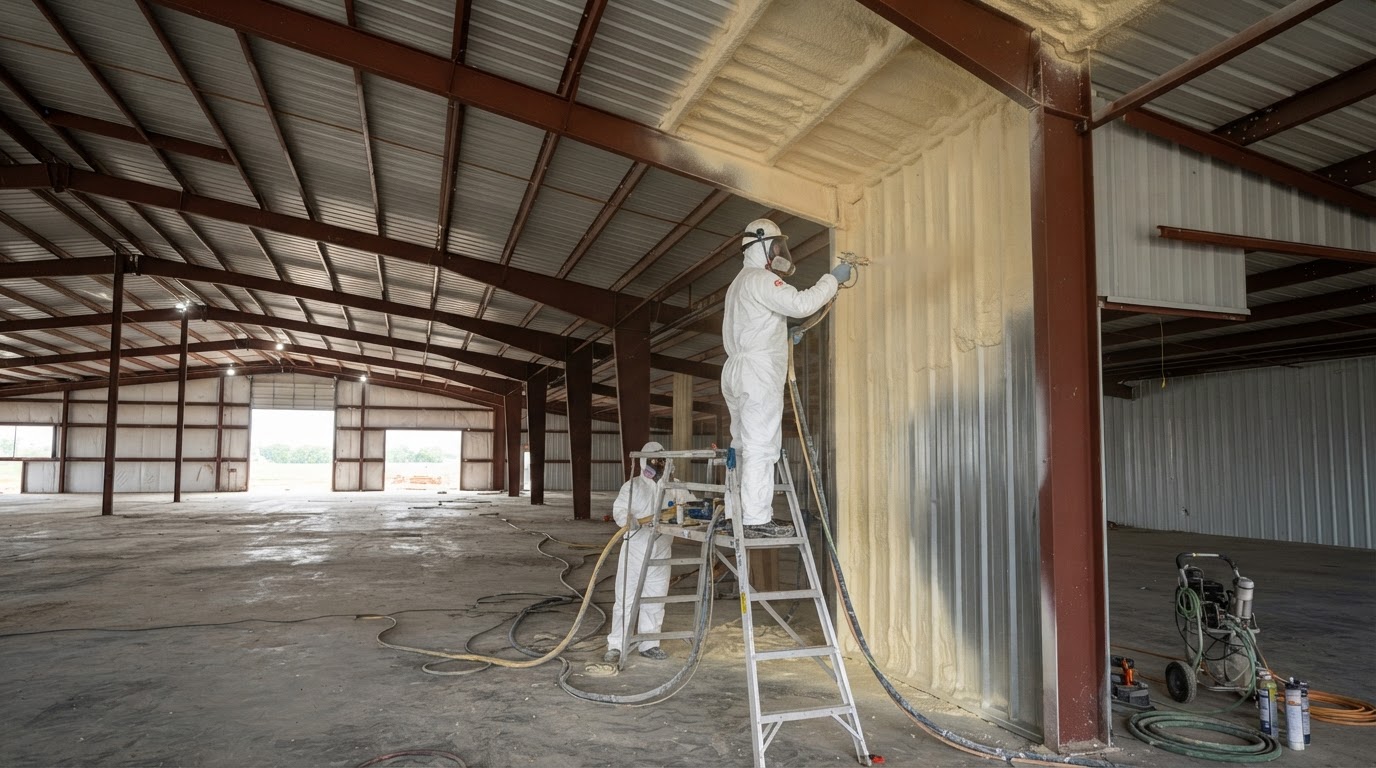
Metal Building Spray Foam Insulation in Madison, AL
Metal building spray foam insulation in Madison, AL is the application of spray polyurethane foam directly to the interior of steel and metal wall and roof panels to insulate the building envelope and reduce uncontrolled air leakage. Madison Spray Foam Installation insulates metal shops, storage buildings, commercial metal structures, agricultural metal buildings, and workshops throughout Madison, Alabama and surrounding North Alabama communities.
Metal buildings have characteristics that make spray foam a common choice: corrugated panels, irregular seams, and rapid temperature swings that can cause condensation on interior surfaces. Closed-cell foam is frequently used because it adheres directly to metal and offers moisture-resistance characteristics at a specified thickness.
To discuss your metal building, request an estimate or call (256) 387-9068. We evaluate the structure and recommend a foam type and thickness for the assembly.
Spray Foam Applications for Metal Buildings Near Madison
In a metal building, spray foam is applied to the interior face of the wall panels and the underside of the roof panels, conforming to the corrugations and sealing the seams, fasteners, and panel overlaps that are difficult to insulate with rigid board or batt materials. That direct adhesion eliminates the air gap behind the panel that contributes to condensation.
Metal structures experience large interior surface temperature swings because steel conducts heat readily. When warm, humid air meets a cool metal surface, condensation can form and drip onto equipment, inventory, and floors. By insulating at the panel and reducing uncontrolled air leakage, spray foam can help moderate those surface temperatures and the conditions that lead to condensation.
Metal buildings vary widely—from small storage sheds to large commercial shops—so the foam type, thickness, and areas to insulate depend on the building, its use, and whether it will be conditioned, semi-conditioned, or unconditioned.
Benefits & Considerations for Metal Building Spray Foam
Metal building spray foam is chosen for direct adhesion to panels, condensation considerations, and air sealing at seams and fasteners. The benefits below describe what is generally achievable when properly specified and installed; results vary by building and application.
Direct-to-Metal Adhesion
Eliminates the air gap behind panels that contributes to condensation on interior surfaces.
Condensation Considerations
Insulating at the panel can help moderate the surface temperatures that lead to condensation drips.
Seam & Fastener Air Sealing
Conforms to corrugations, seams, and fasteners that rigid board cannot seal effectively.
Temperature Control
Helps moderate the rapid interior surface temperature swings common in metal structures.
Spray foam alone does not eliminate all condensation under every circumstance. Condensation depends on interior humidity, ventilation, the dew point, and the building's use. Where bulk water intrusion or ventilation problems exist, those may need to be addressed separately from insulation.
Planning Spray Foam for a Metal Building
Metal building projects require an understanding of the building and its use before spraying. The steps below reflect how we plan a metal building spray foam project in the Madison area.
Review the Building & Use
We assess the metal structure, panel type, and whether it will be conditioned, semi-conditioned, or unconditioned.
Evaluate Walls & Roof
We determine which surfaces to insulate and the access available for application.
Select Foam & Thickness
We recommend closed-cell foam and a target thickness based on the building and goals.
Prepare the Interior
We protect any equipment or contents and verify panel surfaces are suitable for adhesion.
Apply to Panels
Foam is sprayed directly to wall and roof panels in controlled passes to the specified thickness.
Inspect & Review
We verify coverage and depth and review any project-specific considerations with the owner.
For related structures, see our Pole Barn Spray Foam Insulation, Workshop Spray Foam Insulation, and Commercial Spray Foam Insulation pages.
Metal Building Spray Foam Services in the Madison Area
Madison Spray Foam Installation insulates metal buildings for owners in Madison, AL 35758 and surrounding North Alabama communities. Our approach focuses on understanding the building and its use before recommending a foam specification, and on being clear about what insulation can and cannot do for condensation.
Metal buildings are a significant part of the North Alabama market, and we treat them with the same care as residential projects. We explain the foam type, thickness, and preparation required before any material is sprayed.
If you are insulating a metal shop, storage building, or commercial metal structure, the related service pages below offer more detail on adjacent project types.
Metal Building Spray Foam Insulation FAQs
Is spray foam good for a metal building?
Yes, spray foam is commonly used in metal buildings because it adheres directly to steel panels and can help reduce uncontrolled air leakage and manage condensation.
Direct adhesion eliminates the air gap behind panels that contributes to condensation. The appropriate foam type and thickness depend on the structure and its intended use.
What type of spray foam is commonly used in metal buildings?
Closed-cell foam is commonly used in metal buildings because it adheres directly to metal and offers moisture-resistance characteristics at a specified thickness.
Open-cell can be used in some cases where vapor diffusion is addressed, but closed-cell is the frequent choice for condensation and rigidity considerations. We recommend a type based on the building.
Can spray foam be applied directly to metal?
Yes, spray foam adheres directly to clean metal panels and framing, conforming to corrugations and seams.
That direct adhesion is what eliminates the air gap that causes condensation. Substrate cleanliness and dryness matter for adhesion, so preparation is part of the process.
Does spray foam help with metal building condensation?
Spray foam can help reduce condensation by insulating at the panel and moderating the surface temperatures that cause it, but it does not eliminate condensation under every circumstance.
Condensation also depends on interior humidity, ventilation, and the dew point. Where ventilation or bulk water problems exist, those may need separate correction.
Can an existing metal building be spray foamed?
Yes, existing metal buildings can often be spray foamed where interior access is available and panel surfaces are suitable for adhesion.
Retrofit feasibility depends on access, the condition of the panels, and any existing insulation. We evaluate the building before recommending an approach.
How much spray foam does a metal building need?
The amount of foam depends on the surface area to be insulated, the building's use, and the target thickness for the assembly.
Whether the building is conditioned, semi-conditioned, or unconditioned affects the specification. We determine coverage and thickness after evaluating the structure.
What affects the cost of insulating a metal building?
Cost depends on the total wall and roof surface area, foam type, thickness, access, and any preparation required.
Larger buildings and higher thicknesses involve more material. Request an estimate to review the variables that apply to your metal building.
Related Spray Foam Services
Talk With Us About Your Metal Building
Tell us about your metal structure, its use, and any condensation concerns. We will evaluate the building and recommend a spray foam approach for your Madison-area property.