
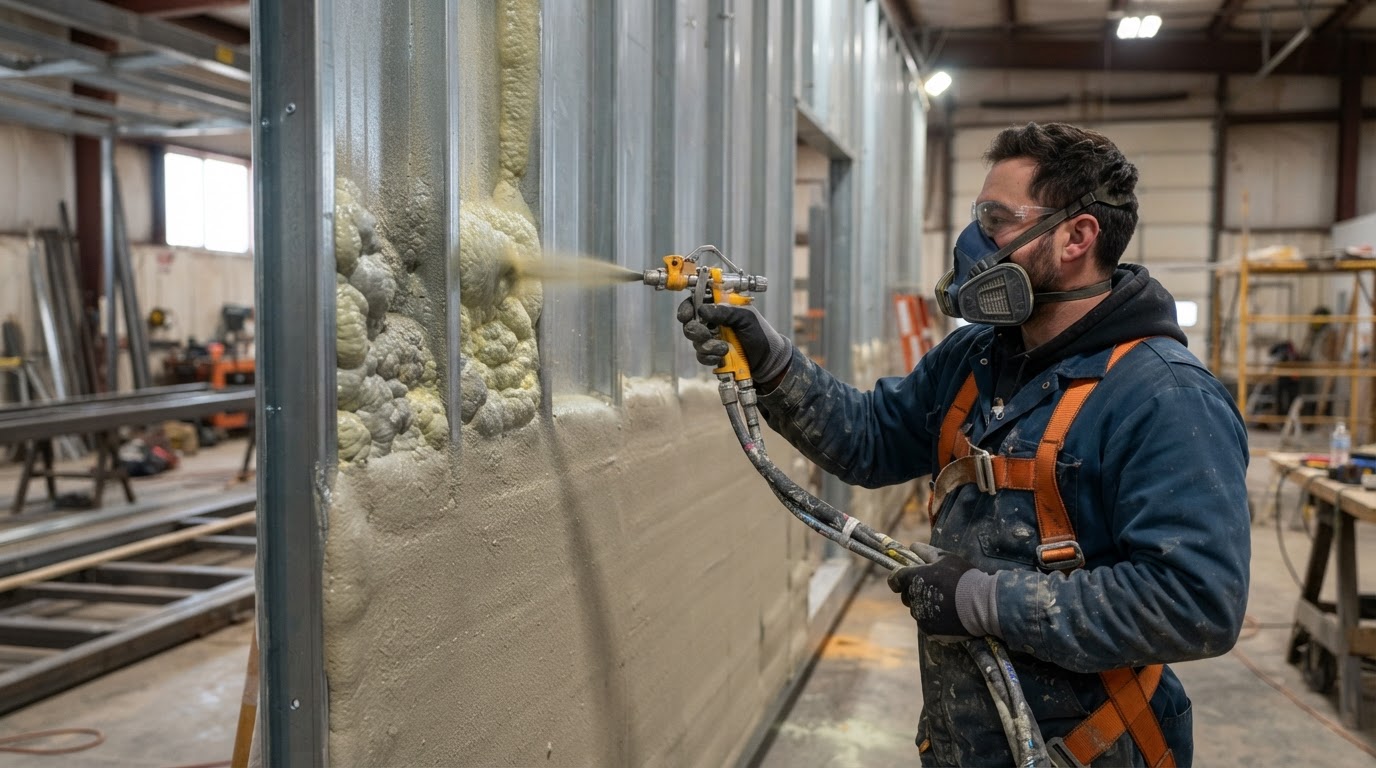
Closed Cell Spray Foam Insulation Near Madison, AL
Closed-cell spray foam insulation near Madison, AL is a higher-density spray polyurethane foam that cures into a rigid material, offering high thermal resistance per inch and air-sealing characteristics. Madison Spray Foam Installation applies closed-cell SPF for metal buildings, crawl spaces, wall assemblies, pole barns, workshops, and commercial structures throughout Madison, Alabama and surrounding North Alabama communities.
Closed-cell foam is often chosen where higher thermal resistance per inch, moisture resistance at a specified thickness, or rigidity is desired. It is not the right material for every assembly, and vapor-retarder performance depends on the material, thickness, and assembly—not a universal claim. We evaluate the project before recommending a material and thickness.
To discuss whether closed-cell foam fits your project, request an estimate or call (256) 387-9068. We match the material to the assembly.
How Closed Cell Spray Foam Insulation Works
Closed-cell spray foam is composed of tightly compacted microscopic cells closed during expansion, which produces a dense, rigid material. It expands less than open-cell foam and delivers higher thermal resistance per inch of thickness, which is useful where cavity depth is limited.
At a specified thickness, closed-cell foam can act as a vapor retarder, and it adheres strongly to surfaces including metal, wood, and concrete. That adhesion and rigidity make it a frequent choice for metal buildings and crawl spaces, and for assemblies where a continuous, moisture-resistant layer is desired.
Vapor-retarder performance depends on the specific material, the thickness installed, and the assembly—not a blanket claim. Building-code vapor-retarder requirements vary by assembly and location, so we specify thickness based on the project rather than assuming one thickness suits every case.
Characteristics & Considerations for Closed Cell Foam
Closed-cell foam is chosen for high thermal resistance per inch, rigidity, adhesion, and moisture-resistance characteristics at a specified thickness. The points below describe its general characteristics; the right material depends on the specific assembly and project goals.
High Resistance Per Inch
Delivers high thermal resistance per inch, useful where cavity depth is limited.
Moisture-Resistant Layer
Can act as a vapor retarder at a specified thickness, depending on material and assembly.
Rigidity & Adhesion
Cures rigid and adheres strongly to metal, wood, and concrete surfaces.
Air Sealing
Forms a continuous air barrier at lower thickness than open-cell foam.
We do not make universal vapor-barrier or waterproofing claims. Vapor permeance depends on the material, thickness, and assembly, and code requirements vary. Closed-cell foam resists bulk water entry better than open-cell, but it is not a substitute for proper drainage, waterproofing, or moisture management where those are needed.
Specifying Closed Cell Foam for Your Project
Closed-cell projects require specification of type and thickness for the assembly. The steps below reflect how we plan a closed-cell spray foam project in the Madison area.
Review the Assembly
We assess the structure, surfaces, and whether moisture resistance or rigidity is a priority.
Determine Thickness
We specify a target thickness based on the material, thermal goals, and any vapor-retarder needs.
Confirm Code Considerations
We account for assembly and local requirements that may affect vapor-retarder needs.
Prepare Surfaces
We verify substrates are clean and dry and protect adjacent areas.
Apply Closed Cell Foam
Foam is sprayed in controlled passes to the specified thickness.
Inspect & Verify
We verify coverage and depth and review any project-specific finishing considerations.
For common applications, see our Metal Building Spray Foam Insulation, Crawl Space Spray Foam Insulation, and Commercial Spray Foam Insulation pages.
Closed Cell Spray Foam Contractor Near Madison, Alabama
Madison Spray Foam Installation applies closed-cell spray foam insulation for residential, commercial, and specialty structures in Madison, AL 35758 and surrounding North Alabama communities. We specify the material and thickness for the assembly rather than applying a one-size-fits-all product.
We help owners understand when closed-cell's higher resistance per inch, rigidity, or moisture-resistance characteristics make it the right choice, and where open-cell would be more appropriate. That includes being clear about what closed-cell can and cannot do for moisture management.
If you are comparing materials or planning a metal building, crawl space, or commercial project, the related service pages below offer more detail.
Closed Cell Spray Foam Insulation FAQs
What is closed cell spray foam?
Closed-cell spray foam is a higher-density spray polyurethane foam with tightly compacted closed cells that cures into a rigid material with high thermal resistance per inch.
It expands less than open-cell foam and can act as a vapor retarder at a specified thickness. It is commonly used in metal buildings, crawl spaces, and where space is limited.
Where is closed cell foam commonly installed?
Closed-cell foam is commonly installed in metal buildings, crawl spaces, wall assemblies, pole barns, workshops, and commercial structures.
It is chosen where higher resistance per inch, rigidity, or moisture-resistance characteristics are desired. The right locations depend on the assembly and goals.
Is closed cell good for metal buildings?
Yes, closed-cell foam is frequently chosen for metal buildings because it adheres directly to steel panels and offers moisture-resistance characteristics and rigidity.
Direct adhesion can help manage condensation on the underside of metal panels. See our Metal Building Spray Foam Insulation page for the detailed approach.
Is closed cell foam suitable for crawl spaces?
Yes, closed-cell foam is frequently used in crawl spaces because of its moisture-resistance characteristics at a specified thickness in damp environments.
It is not a substitute for drainage or moisture correction where water intrusion exists. See our Crawl Space Spray Foam Insulation page for the full approach.
How is closed cell different from open cell?
Closed-cell is denser, more rigid, expands less, and can act as a vapor retarder at a specified thickness; open-cell is softer, more expansive, and vapor permeable.
Closed-cell suits metal buildings, crawl spaces, and space-limited assemblies; open-cell suits interior residential attics and walls. See our Open Cell page for the full comparison.
How thick does closed cell spray foam need to be?
The required thickness depends on the material, the thermal goals, and any vapor-retarder or code requirements for the assembly.
We specify a target thickness per project rather than assuming one thickness suits every case. Vapor-retarder performance depends on material, thickness, and assembly.
Is closed cell spray foam waterproof?
Closed-cell foam resists bulk water entry better than open-cell foam, but it is not a waterproofing product and should not be relied on to correct water intrusion or drainage problems.
Vapor-retarder performance depends on material, thickness, and assembly. Where waterproofing or drainage is needed, those should be addressed separately from insulation.
Related Spray Foam Services
Get a Closed Cell Spray Foam Estimate
Tell us about your structure and goals. We will evaluate the assembly, specify the right thickness, and recommend a closed-cell approach for your Madison-area project.